Racial Realities

10:37 PM Posted In Edit This 3 Comments »
There is a movement taking place in the United States these days. One that says that race does not exist. We have proven that races are not biologically different. That race is literally skin deep. So, they ask, why do we continue talking about race as if it were reality? Why do we continue to engage this false and damaging concept? Why don't we instead talk about classism, gender inequalities, or prejudices against the GLBT community? If we start living the color-blind reality--one that sees no color--racism will cease to exist.

While I appreciate the (finally) scientific proof of what we should have known long ago, I think that this notion of 'color-blindness' is quite damaging. First, I think only Whites have the optio of being color-blind. I think you will be hard-pressed to find an African-American, Latino, Native American Indian, or Chinese person who will tell you that they do not 'see color.' Rather, most likely, they will tell you that people first see color in them. that prior to noticing if they are tall or short, fat or thin, well or poorly dressed, people notice that they are African-American. Second, I think that color-blindness serves to perpetuate White supremacy in our culture. It allows us to blame the victims of our wrongs--those we colonized, enslaved, and denied access to what we consider our basic human rights. Because we have chosen to see no color, we are then able to say that those people could achieve the same things we've achieved if they would only try harder, work harder, apply themselves. We are able to over look centuries of oppression wherein we denied education, justice, and financial resources. We assume a level playing field where one does not exist.

Does this mean that I think that classism, homophobia, and sexism do not exist? Absolutely not. I think those issues deserve just as much thought, talk, and ACTION as racism. However, I think it is way too easy for us White people to make excuses and blame people of color for problems that did not begin with them. I think it is time for us to feel uncomfortable enough to make some changes. If your school is not integrated, you need to be asking some questions. If your church is not integrated (and I don't just mean one 'token' person of color), you need to ask some questions. If your circle of friends is not integrated, you need to ask some major questions. The same goes for your community, the professionals in your life (doctors, dentists, therapists), and your workplace.
Don't stop with questions. Follow that up with action--changes. Make friends outside of your racial 'comfort zone.' Address underlying prejudices in your church body that make this so. Ask your employer about hiring practices. Take the time to search out African American doctors and Mexican American dentists. Do it because it is the right thing to do. Right for you, your church, community, and your children.

If my little tirade did not sell you, if you still think that color-blind is really the way to go... that there is really no racism left in the U.S.-- check out my fellow adoptive parent's blog about what recently happened to her in the grocery store.

Shout out to my friend Marcie-- :) And, Karen... that guest blogger invitation is still open!!
A Lesson in Privilege.

7:56 PM Posted In Edit This 6 Comments »


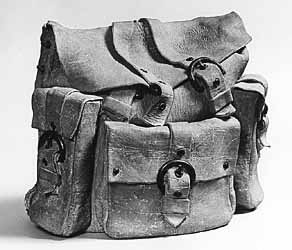
"I have come to see white privilege as an invisible package of unearned assets that I can count on cashing in each day, but about which I was "meant" to remain oblivious. White privilege is like an invisible weightless knapsack of special provisions, maps, passports, codebooks, visas, clothes, tools , and blank checks. "


As I have previously shared with you, my loyal blog readers, I am writing my Masters paper on Racial Identity Development AND I am taking a class entitled "Race, Ethnicity, and Inequality in Education" this semester. So, to say that I have spent some time thinking about race is a bit of an understatement. Plus, with this little adoption we've got going on...

So, all of this is not to say that the only thing we are thinking about in terms of the adoption is race, BUT it has definitely been a big hotspot. I can say that this is one of the ways that adoption is making me a better person in a way that pregnancy and bio kids probably wouldn't have. I have had to seriously wrestle with racial issues in the U.S. and globally--Why is my child available for adoption? Why does it take double the time to adopt a White or Asian child as it does to adopt a child of African descent?


Anyways, one article that has been simmering at the back of my mind for a couple of years now was written by Peggy McIntosh and was first presented in 1986. I first read the article at a Cultural Competence training given through my work a couple of years ago. It was very salient for me... maybe one of the beginning seeds of my current state. The quote above is from her article, as is the list below. The list below are 26 of her observations of White Privilege in her life.


1. I can if I wish arrange to be in the company of people of my race most of the time.
2. If I should need to move, I can be pretty sure renting or purchasing housing in an area which I can afford and in which I would want to live.
3. I can be pretty sure that my neighbors in such a location will be neutral or pleasant to me.
4. I can go shopping alone most of the time, pretty well assured that I will not be followed or harassed.
5. I can turn on the television or open to the front page of the paper and see people of my race widely represented.
6. When I am told about our national heritage or about "civilization," I am shown that people of my color made it what it is.
7. I can be sure that my children will be given curricular materials that testify to the existence of their race.
8. If I want to, I can be pretty sure of finding a publisher for this piece on white privilege.
9. I can go into a music shop and count on finding the music of my race represented, into a supermarket and find the staple foods which fit with my cultural traditions, into a hairdresser's shop and find someone who can cut my hair.
10. Whether I use checks, credit cards, or cash, I can count on my skin color not to work against the appearance of financial reliability.
11. I can arrange to protect my children most of the time from people who might not like them.
12. I can swear, or dress in second hand clothes, or not answer letters, without having people attribute these choices to the bad morals,the poverty, or the illiteracy of my race.
13. I can speak in public to a powerful male group without putting my race on trial.
14. I can do well in a challenging situation without being called a credit to my race.
15. I am never asked to speak for all the people of my racial group.
16. I can remain oblivious of the language and customs of persons of color who constitute the world's majority without feeling in my culture any penalty for such oblivion.
17. I can criticize our government and talk about how much I fear its policies and behavior without being seen as a cultural outsider.
18. I can be pretty sure that if I ask to talk to "the person in charge," I will be facing a person of my race.
19. If a traffic cop pulls me over or if the IRS audits my tax return, I can be sure I haven't been singled out because of my race.
20. I can easily buy posters, postcards, picture books, greeting cards, dolls, toys, and children's magazines featuring people of my race.
21. I can go home from most meetings of organizations I belong to feeling somewhat tied in, rather than isolated, out-of-place, out numbered, unheard, held at a distance, or feared.
22. I can take a job with an affirmative action employer without having coworkers on the job suspect that I got it because of race.
23. I can choose public accommodation without fearing that people of my race cannot get in or will be mistreated in the places I have chosen.
24. I can be sure that if I need legal or medical help, my race will not work against me.
25. If my day, week, or year is going badly, I need not ask of each negative episode or situation whether it has racial overtones.
26. I can choose blemish cover or bandages in flesh color and have them more or less match my skin.

Are any of these particularly salient for you? Can you think of any others? (The bandaid one always gets me... )


McIntosh, P. (1989). White privilege: unpacking the invisible knapsack. Peace and Freedom, July/August, 10-12.


Perspective

6:31 PM Posted In Edit This 6 Comments »
Check out these two maps:

This one is your typical map. One that is (at least mostly) current. That you could find anywhere.

This one is proportionally correct. The continents are sized correctly according to the land area actually covered by each continent.


Notice a difference? Anyone care to speculate why?

(These maps and comparison were brought to you by Wide Horizons monthly waiting parent email.)

White Beaches

3:58 PM Posted In , , Edit This 6 Comments »


Last week, we went to Florida to see my grandparents. My granddad had multiple by-pass surgery two weeks ago and has had a difficult time recovering. He is still on the ventilator (after a week) which is a bit scary, and has been sedated because of this. The doctors say that his surgery was successful, but his lungs haven't been cooperating since the surgery. Thanks to all of you who wrote me encouraging emails when we left in a whirlwind to go down to see him and support my grandmother. Granddad is stable, but not out of the woods. My parents are coming home from teaching in Greece to help my grandmother and be with my granddad as he continues to recover and begin the rehabilitation process. (He's been laying in a hospital bed w/o moving for over a week, so the rehab will be intensive.)


While we were in Florida, we did get to spend a couple of hours on the beaches of the beautiful Anna Maria Island (just outside of Bradenton). I have always loved this beach. The water is clear and blue; the sand is snow white and crunches under your feet. However, this time, I noticed that all the people on the beach there are white! I think I saw maybe one Latina woman with her child. Otherwise, white, white, and more white. I guess this is just the beginning of my racial awareness. When we go to visit (which we will!), our child will likely be the only person of color on the beach. At what point will he or she notice?

In other news: We are going to a Mets/Reds baseball game this weekend for Justin's birthday. 14 of our friends are coming, too! This should be a blast!


Gramma Carol has been buying and looking at baby stuff all over Greece and Egypt. I know for a fact that Baby Burton already has a shirt that says, "My gramma went to Greece, and all I got was this shirt." (or something to that effect:))

Let the Paper Begin!

2:48 PM Posted In , Edit This 4 Comments »


As many of you know, I am supposedly finishing up a masters program in December of this year. In order to graduate, I have to write a masters thesis and have chosen to write it on the development of racial identity in transracially adopted children.

Here are the questions I plan to address:
1. How do children develop a racial identity?
2. How is this different (or the same) for children who are adopted
transracially?
3. How have adoption laws affected the way we view racial identity
development in adopted children?
4. What can adoptive parents do to foster positive racial identity
development in their transracially adopted children?

What other questions might you guys have about this topic?
Any thoughts or things you have read that have influenced your thinking about race and/or identity?

Guilt Revisited

7:12 PM Posted In Edit This 2 Comments »
I have finally finished my papers for this semester, so I am allowing myself to get back on the blogging train again.

I have a couple of thoughts about the 'guilt' post by Swerl. There are things about adoption that I feel guilty about, but I haven't felt guilty about the decision not to share our child's family details with people outside our family. Our social worker talked to us from the beginning of our home study process about thinking about the adoption as a triangle. We are one point of the triangle--the adoptive parents, our child will be another point, and his or her birthparents will make the third. Each point has its own perspective from which it is viewing the process. Each experiences joys and heartaches associated with the events as viewed from its point of view.

So, as adoptive parents, it is important for us to consider how the other triangle points experience the adoption. This is where the privacy about our child's history will come into play. I agree with many of the commenters on the referenced blog. We probably won't tell more of our child's story to others than we have told our child. This does not mean that we won't want to talk to people about the adoption! This absolutely does not mean that we are not (already) proud of our child and what he or she has already gone through to be with us. But, it does mean that the reason his or her mother chose to make an adoption plan will probably be something that stays within our family until our child is old enough to decide how much of that information he or she wants to share with others.

Something J and I have talked about that was mentioned on that blog was our reaction to seeing multiracial families in public... especially parents who have children who are a different race than they are. We watch them. We look and we brainstorm about their lives and we hope that everything is wonderful. We tear up. We talk about how it will be for us. We wonder how it is for them. I will have to be more careful about this. I DO try to respect the privacy of these families... I have not once gone up to any of them to ask questions about a possible adoption. However, at this point, I am pretty sure that I will be OVERJOYED to be approached and asked about how we came to be such a beautiful family. I am armed and ready to politely shoot down any misconceptions or defend my family against any offense!

Free your mind and the rest will follow.

12:25 PM Posted In Edit This 0 Comments »


I am planning on writing a couple of posts on this topic, as it is something that we discussed a lot during our homestudy and we went to a whole conference on it. When we attended the Transracial Adoption conference at St. John's in NYC, there was a mix of people in attendance. A few birth parents, a lot of adoptive parents, many adoptees, and social workers working in the field of adoption were all present. Each party had a very different point of view regarding the adoption process.

The overwhelming feeling from the adult adoptees, most of whom were adopted transracially, was that they did not feel that their adoptive parents prepared them to be people of color in society as adults. They stated that while they lived at home with their white parents, color, of course, did not matter. They felt loved and cared for. Many of them even felt that their adoptive parents did well in talking to them about adoption. However, when they left home to go to college or begin working, the outside world-at-large did not see them as white, or raceless, or colorless. The outside world viewed them as African American, Asian American, Hispanic American. And, when they were unable to blend in with the cultures that come with those labels, they felt like outsiders.

Step 1: Make sure that you are intimately interacting with people from a diverse mix of cultural and racial backgrounds. If you are not doing this, you are communicating something to your child about which people you value. You are also, in a sense, excluding your child from relationship with a group of people that look like him or her. Step 2: Examine your life for latent signs of prejudice and racism including the language you use, the church you attend, the places you shop (or don't shop), etc... Step 3: Become aware of cultural resources in your community, including becoming involved IN the community of which your child's ethnicity will be associated. Step 4: Recognize that our adult associations and stereotypes of people of races different than our own are not to be handed down to our children. Recognize that all children perceive race differently than adults... without all the baggage. Do not gift this to your children. Step 5: Be aware enough to know that racism exists. People with skin that is not white have a different life experience than people whose skin color is white. Your child will at some point be discriminated against because of his or her skin color. He or she must be prepared to deal with that and have tools for defending himself/herself against ignorance. He or she has you (the parent) as a teacher.

There will be more thoughts on this subject. Today is a "rain day," a 'state of emergency' in NJ due to all of the flooding. I just had a couple of minutes for a new post while J was on the treadmill. We are heading over to friend's house to shower and work as our water is not working.

Stay tuned for a post specifically on the history of transracial adoption in the U.S. (it hasn't always been legal...).